STORY
My Son Left the Steakhouse Bill—Then a Forged Deed Surfaced
Serena pleaded to a felony related to the false acknowledgment, lost her commission permanently, paid restitution, and received probation with community service.
Phaedra pleaded no contest to filing a false instrument and identity theft. She avoided prison but received probation, restitution obligations, and 180 days of home confinement.
Donovan entered a plea on conspiracy and attempted elder financial abuse. His consulting clients disappeared. His professional license was suspended for two years.
Their marriage lasted six months after the sale.
Neither received custody arrangements as convenient as they expected, and the children learned an edited version of the truth from them.
I gave them the complete version when they asked.
I did not call their parents monsters.
I showed them documents.
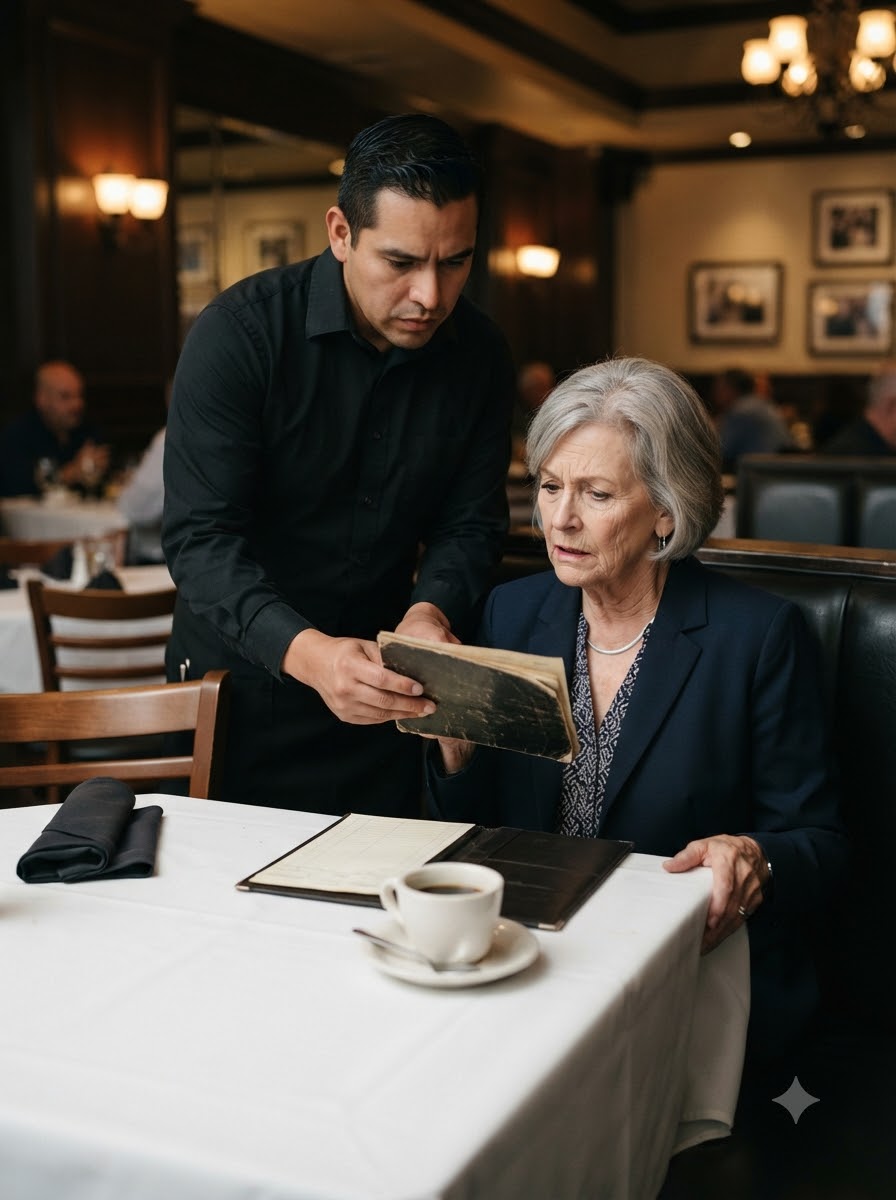
The restaurant eventually charged Phaedra’s card for the remaining $838.32, plus the agreed gratuity. When she disputed it, the manager provided the itemized order records and security footage of their deliberate departure.
Adrian supplied a statement.
He remembered Donovan pausing at the host stand to ask whether the card on the reservation would be charged automatically if “the older lady at the table” refused to pay.
It did.
The following spring, I drove to Lake Tahoe with Marshall.
The old cabin was no longer ours. Its new owners had painted the shutters green and rebuilt Roland’s dock.
But a smaller place nearby had come onto the market. It had two bedrooms, a stone chimney, and windows facing the water.
I bought it without borrowing a dollar.
On my first morning there, I unpacked the blue enamel coffee pot. I had found it in a box at the back of my garage, wrapped in one of Roland’s old flannel shirts.
The handle was still loose.
I made coffee anyway.
My oldest granddaughter visited in June. We sat on the dock with our feet above the water. She was sixteen and angry at everyone, including me.
“Couldn’t you have just worked it out privately?” she asked.
“That is what people say when privacy protects the person doing harm.”
“Dad says you took the house.”
“Your father pledged the house against money he owed, then tried to erase the debt by forging my name.”
She looked across the lake.
“Do you still love him?”
“Yes.”
The answer surprised her.
It surprised me too.
“But love doesn’t require me to help him hurt me,” I said. “And forgiveness is not the same as pretending.”
She leaned her shoulder against mine.
We stayed that way until the light turned gold.
That evening, I called Donovan.
Our conversations were infrequent and supervised by boundaries he disliked. I would not lend him money. I would not discuss his legal case. I would not accept insults disguised as grief.
He told me he had started counseling.
He told me he was working at a small equipment company.
Then he said, “I keep thinking about that dinner.”
“So do I.”
“I folded my napkin because I felt guilty.”
“I know.”
“How?”
“Because people reveal themselves in the details.”
He was quiet.
“I thought you’d pay.”
“I know that too.”
After we hung up, I poured coffee into the blue enamel pot and carried it to the porch.
For years, I had believed belonging was something my family could revoke if I became inconvenient. I had made myself smaller to fit into their invitations, their photographs, their version of gratitude.
But dignity was not a place at Donovan’s table.
It was the right to leave that table owing only for what I had chosen.
On the wall inside the cabin hung a framed copy of the restored deed of trust, not because I cared to remember the money, but because of the signature at the bottom.
Mine.
The one they copied.
The one they underestimated.
The one that, in the end, still belonged to me.

More From This Author