STORY
My Son Turned Me Away in My Wheelchair—Then the Bank Found Our Missing Money
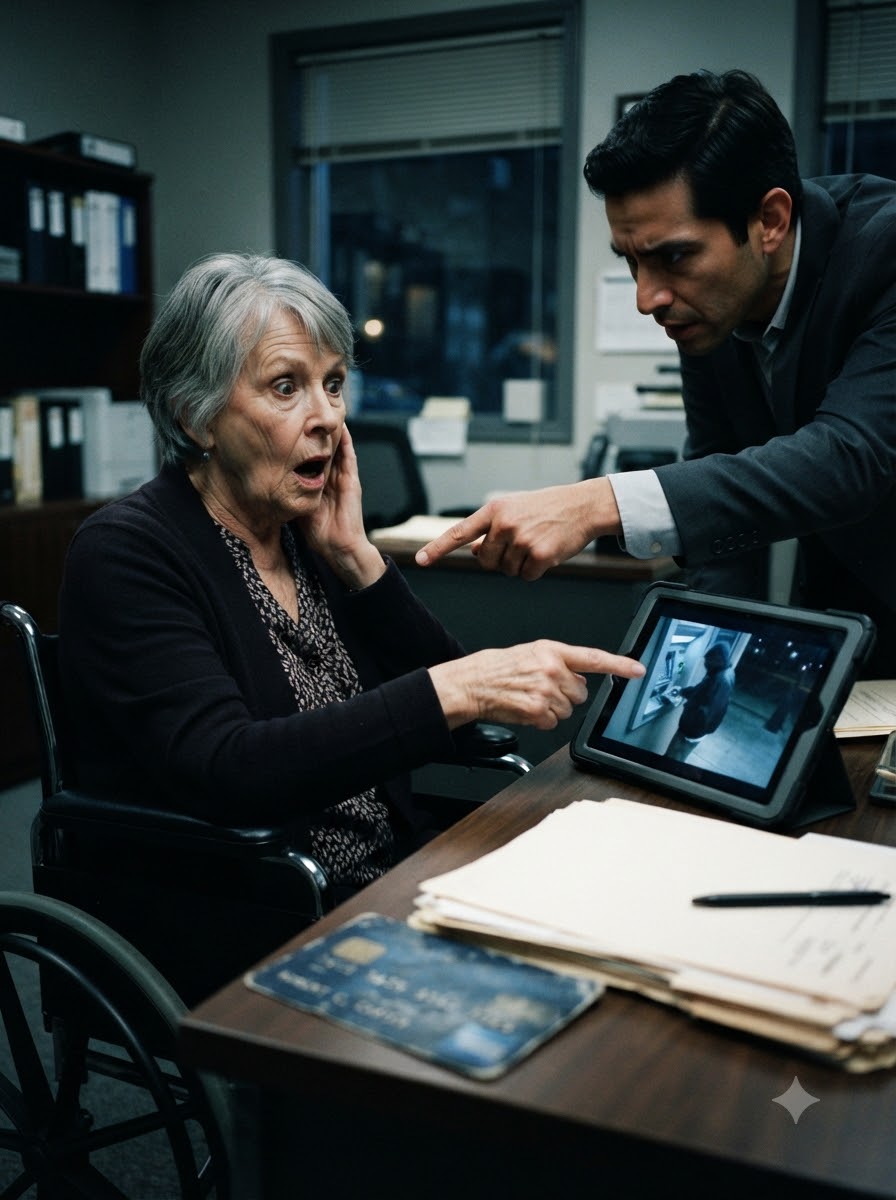
He opened a drawer and removed a sealed envelope. My name was written across it in Robert’s handwriting.
Helen.
I touched the paper but did not open it.
“What is this?”
“Before I answer, I need to ask you some questions. Has anyone pressured you to sign documents recently?”
“No.”
“Has anyone told you that you are incapable of managing your own affairs?”
I thought of Michael’s voice. This is exactly why assisted living exists.
“Yes.”
“Has anyone taken control of your bank accounts, mail, phone, or medical records?”
I hesitated.
“Michael has my online banking password.”
Daniel’s face changed.
“How did he get it?”
“He said he needed it to help me pay bills after Robert died.”
“Did you give him permission to transfer money?”
“No.”
“Did you sign a power of attorney?”
“Michael brought me papers last year. He said they were for medical emergencies. I signed where he pointed.”
Daniel closed his eyes briefly.
“Mrs. Carter, I need you to understand that there may be immediate danger to your finances.”
He opened the envelope.
Inside was a letter dated six months before Robert’s death.
Helen, if you are reading this, then either I am gone or someone has convinced you that you cannot stand alone. You can. But I am leaving you proof, not merely reassurance.
Beneath the letter was a document labeled Carter Family Security Trust.
Daniel explained that Robert had created the trust nearly a decade earlier. It held investments, life insurance proceeds, and the proceeds from the sale of a commercial property he had inherited from his father.
The total value was just over four million dollars.
I stared at him.
“That’s impossible.”
“It is not.”
“Robert told me we were comfortable. He never said—”
“He wanted you to live comfortably without advertising what you had.”
I felt suddenly cold.
“Where is the money now?”
“Most of it remains protected. But a significant amount has been withdrawn from your personal accounts over the last eighteen months.”
He turned the screen toward me.
There were transfers. Repeated payments to a construction company. Wire transfers to an account in Delaware. Credit card charges for a luxury resort, a private school, and a law firm.
The name attached to several payments was Michael Carter.
I could not breathe.
“How much?”
“Three hundred and eighty-six thousand dollars.”
I thought of my two hundred and thirty-seven dollars. Of the pill bottles lined up beside my couch.
Daniel tapped the screen again.
“There is a second issue. The power of attorney you mentioned was used to alter the trust.”
“Alter it how?”
He brought out another document.
A recent amendment named Michael as successor trustee and granted him authority to control distributions. But the signature on the amendment was not mine.
I knew my signature. I had signed Robert’s death certificate, our mortgage documents, every birthday check I had ever sent Michael.
The signature on the amendment was a careful imitation.
“That isn’t mine,” I whispered.
“I know.”
“Then why didn’t you stop it?”
“We did. The document was rejected because it came through an unverified channel. But copies of it were sent to three institutions, and Michael used one of those copies to persuade your bank that he had authority over your accounts.”
Daniel opened a second file.
Inside was a thick packet of printed emails.
Michael had written to Pinnacle three months earlier, claiming I was “experiencing cognitive decline” and was “easily confused about money.” He asked them to restrict my access to the trust.
Daniel’s reply had requested medical documentation.
Michael had never provided it.
Instead, he had apparently gone to my local bank, where an assistant manager accepted the questionable power of attorney and changed my account access.
“He told them I was incompetent?” I asked.
“He told several people that.”
I stared out at the city. Cars moved along the streets below, tiny and orderly. Somewhere among them, people were going to work, buying lunch, worrying about ordinary things.
I had spent years believing my greatest fear was becoming a burden.
The greater danger had been the person offering to manage me.
“What do we do?” I asked.
Daniel’s voice softened.
“We freeze every account he can reach. We notify the bank of suspected elder financial abuse. We file a police report. And we arrange an independent medical evaluation to establish that you are competent and capable of making your own decisions.”
“And Michael?”
“We confront him only after we secure the evidence.”
I thought of my son closing the door.
“Do it.”
By lunchtime, my accounts were protected. By evening, a detective named Laura Bennett had taken my statement. She was patient, direct, and careful not to treat me like a fragile witness.
The next day, a handwriting expert confirmed that the trust amendment bore a traced signature. A forensic accountant found that the money sent to the construction company had paid for renovations to Michael’s house, including a pool, an outdoor kitchen, and a second vehicle.
The Delaware account belonged to Ashley’s sister.
The law firm payments were for an attorney Michael had hired to prepare the false amendment.
The evidence was not a misunderstanding. It was a plan.
The second layer emerged three days later.
Daniel found a hidden clause in Robert’s original trust documents. If anyone attempted to use fraud, coercion, or undue influence to gain control of my assets, that person would be removed from the trust and all future inheritance would pass to a charitable foundation supporting disabled seniors.
Robert had anticipated the possibility that someone would try to isolate me.
He had not trusted the future.
He had trusted the paperwork.
Daniel arranged a meeting at Pinnacle. He invited Michael, Ashley, Detective Bennett, the bank’s regional security officer, and an attorney who represented the trust.
I almost canceled.
Not because I was afraid of Michael.
Because I was afraid of what I would see in his face.
He arrived wearing a navy suit. Ashley followed in oversized sunglasses, though we were indoors. They looked like a couple attending a business meeting, not parents who had abandoned an injured woman on their driveway.
Michael smiled when he saw me.
“Mom, this is a little dramatic.”
I said nothing.
Daniel gestured toward the conference table.
“Please sit.”
Michael remained standing.
“I’m not sure why I was summoned here. My mother has been under a lot of stress. She can be confused.”
Detective Bennett opened a folder.
“We have medical records from your mother’s physician, Dr. Patel. They show no cognitive impairment.”
Michael’s smile disappeared.
“That doesn’t prove anything.”
“It proves she was competent when she signed the documents you presented to her,” Bennett replied. “The problem is that the document granting you financial authority appears to have been altered after she signed it.”
Ashley crossed her arms.
“This is absurd. Michael has been caring for Helen for years.”
“By caring,” I said, “do you mean taking my money?”
Her eyes flashed.
“You gave him money willingly.”
“I gave him money for this house. You took money from my accounts without permission.”
Michael turned toward me.
“Mom, you don’t understand what you’re saying.”
Daniel placed a stack of documents on the table.

More From This Author