STORY
My Wife Hid Our Intimacy Inside a Calendar Code Called “Grant Closeout.” Then She Told Me What It Was Costing Us.
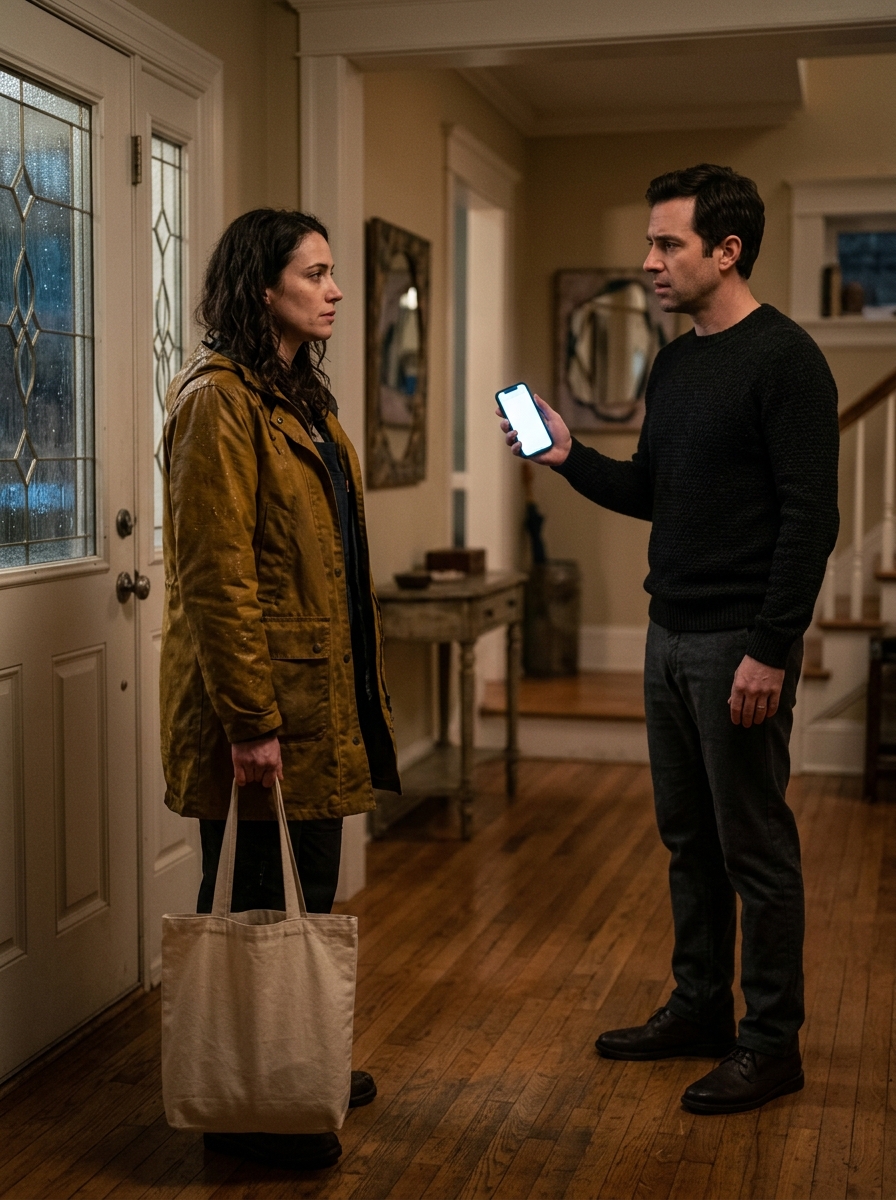
“It means I’m tired, but I don’t want you to hear that as I don’t want you.”
I said, “You don’t have to explain.”
But my voice had gone flat.
I knew it had. I could hear the disappointment in it even then. I had simply believed disappointment was a private emotion, something I was entitled to feel without consequence.
Sloane had studied me for a few seconds.
“Maybe another night,” she said.
“Sure.”
There it was. The little word I had used for years.
Sure.
Not shouted. Not cruel. Almost polite.
The kind of word that closed a door softly enough to let the person using it claim they had not slammed anything.
At 6:47, I texted her.
I’m awake. I won’t ask you to come home before you’re ready.
She didn’t answer for an hour.
Then:
I’ll meet you at Bellwether at ten. Don’t make breakfast.
I wrote back, Okay.
I deleted it.
I wrote: I understand.
I deleted that too.
Finally, I sent: I’ll be there.
***
Bellwether was a narrow café with scratched wooden tables and the best coffee in the neighborhood. Sloane was already in a corner booth when I arrived.
She had changed into a gray sweater. Her tote was beside her. She looked tired but composed.
I sat across from her.
For a moment, neither of us spoke.
Then I said, “I don’t know how to ask this without making it worse.”
“Try anyway.”
“Did you want me?”
Sloane looked down at her coffee.
“That question is part of what made this happen.”
“I don’t understand.”
“You ask it like there are only two answers. Yes means we’re okay. No means something is broken.”
“I ask because I want to know.”
“You ask because you want reassurance.”
I flinched.
She saw it and closed her eyes briefly.
“I’m not saying that to hurt you,” she said. “I’m saying it because I need you to understand what it felt like from my side. You weren’t asking, ‘What do you want right now?’ You were asking, ‘Are you still the kind of wife who wants me enough?’”
I stared at the sugar jar between us.
“Those aren’t the same question,” she said.
“No.”
“And I kept answering the first one because I was afraid of what would happen if I answered the second.”
I thought about that.
“Did you ever want me on those nights?”
“Yes.”
The answer came quickly enough to hurt.
“Which nights?”
“Some of them.”
“Can you tell which?”
“Not from the calendar.”
She lifted her coffee, then set it back down.
“The first few times, Grant Closeout was just a way to give myself a runway. I don’t move from work brain to intimacy brain because the clock says it’s nine-thirty. I need to come home. I need to eat. I need to feel like my body belongs to me again.”
“I know you work a lot.”
“You know I have a job. That’s different.”
She looked out the window at a delivery truck backing into an alley.
“When you initiated at eleven-thirty, you weren’t wrong for wanting me. But I was already exhausted. Sometimes I said yes because I wanted you. Sometimes I said yes because I wanted the disappointment to end before it became tomorrow’s problem. Sometimes I said yes because I thought if we were close, you would stop worrying that we weren’t close.”
I had no defense against the accuracy of that.
“I didn’t know I was doing that,” I said.
“I know.”
“You could have told me.”
“I tried.”
“When?”
“Every time I said, ‘Not tonight,’ and you went quiet.”
“I was trying to give you space.”
“You were giving me a consequence.”
I looked at her sharply.
“That’s not fair.”
“It might not have been intentional,” she said. “It was still real.”
She did not say it dramatically. That made it impossible to dismiss.
She told me about the night that had started the calendar.
It had been in March, after her mother’s surgery. Sloane had spent three days driving across town, managing medication, answering calls from the hospital, and trying to keep her mother from apologizing for needing help.
I had made dinner the night she came home.
I remembered that. I had cooked pasta and opened the expensive wine.
What I didn’t remember was how quickly I had turned the evening toward my own need to feel close to her.
“I had been holding myself together for a week,” Sloane said. “You asked if I wanted to go upstairs. I said I couldn’t. You said, ‘I guess I’m not the person you come to when things are hard.’”
I felt my face grow hot.
“I said that?”
“You said, ‘I don’t know how to be your husband if you never want me when you’re overwhelmed.’”
“I was scared.”
“I know.”
“I didn’t mean it as pressure.”
“I know that too.”
The waiter came by. We ordered nothing.
Sloane continued. “You went to bed early. The next day you were careful with me. Too careful. You didn’t touch my shoulder. You didn’t joke with me. You answered every question, but you made the house feel like it had a bruise.”
“I was trying not to ask again.”
“You were trying not to be rejected again. Those aren’t the same thing.”
I rubbed my hands together beneath the table.
“So you started scheduling intimacy.”
“I started scheduling the possibility of it. I thought if I knew ahead of time, I could arrive with more of myself. I thought if you knew it was on the calendar, you wouldn’t ask at the worst possible moment.”
“That sounds reasonable.”
“It was reasonable for about three weeks.”
“What changed?”
“You started treating it like a reservation.”
I looked up.
She gave a small, humorless smile. “You’d glance at the calendar and become lighter. You’d finish the dishes. You’d shave. You’d kiss me in the kitchen and say, ‘Tonight, right?’”
“I was excited.”
“I know. But then the appointment had a weight. If I was tired, I wasn’t just tired. I was canceling something you had been waiting for.”
“I thought the point was that we both knew the plan.”
“The plan was time together. You made the outcome the plan.”
I sat back.
The distinction was simple. I had understood it the moment she said it.
That was the worst part.
“Why didn’t you stop?” I asked.
Sloane’s fingers tightened around her cup.
“Because sometimes it worked.”
She said it quietly.
“Sometimes I wanted you. Sometimes the anticipation helped. Sometimes I felt close to you before we even went upstairs. And then sometimes I didn’t. But by then I had told you there was a plan, and I didn’t know how to change the plan without proving you right about me.”
“About what?”
“That I was withholding. That I was difficult. That you were the only one trying.”
I stared at her.
“I never thought you were difficult.”
“You didn’t have to call me that.”
The silence between us was not empty. It held every time I had said “sure,” every time I had gone to sleep facing the wall, every time she had come looking for me because the quiet had become harder to bear than the original disagreement.

More From This Author