STORY
My Wife Hid Our Intimacy Inside a Calendar Code Called “Grant Closeout.” Then She Told Me What It Was Costing Us.
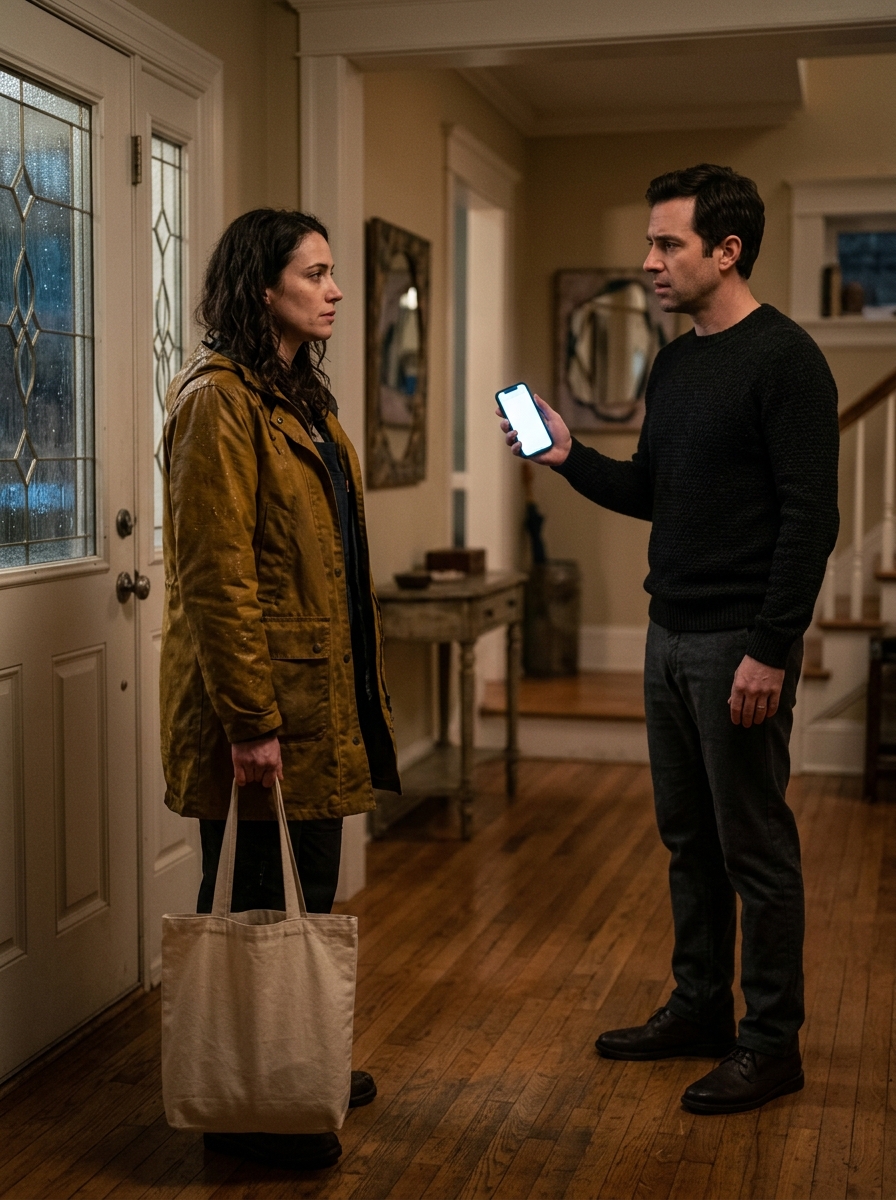
“I don’t want to lose you,” I said.
“I know.”
“I don’t want a marriage where we never touch.”
“I know.”
“What do you want?”
She breathed in slowly.
“I want a marriage where touching me isn’t the only way you know we’re okay.”
That answer stayed with me.
***
Sloane spent three nights at her sister’s apartment.
She did not ask me to bring her clothes. She did not ask me to call. We exchanged messages about practical things: the plumber, a package that had been delivered to the wrong building, whether the dog had eaten.
We did not have a dog. The last message was from a wrong number.
On the fourth morning, she came home for more clothes.
I was in the kitchen, making coffee. I saw her standing in the doorway and almost crossed the room.
She raised one hand.
“Can I hug you?” she asked.
The question made my chest ache.
“Yes.”
She came to me. We held each other for maybe ten seconds.
It was not sexual. It was not reconciliation. It was not evidence.
When she stepped back, she looked frightened by how much she wanted the hug to remain only a hug.
“I’m going to sleep in the guest room for now,” she said.
“Okay.”
“I’m not promising a timeline.”
“Okay.”
“And I don’t want you to become wonderfully patient for two weeks and then use that patience as proof that I owe you something.”
I almost smiled, but stopped myself.
“That is specific.”
“I’ve been married to you for eleven years.”
“I’ll try not to make a performance out of not performing.”
She gave me a tired look.
“Don’t make a joke when you’re scared.”
I nodded.
“I’m scared,” I said.
That was better.
She carried her clothes down the hall.
***
I started seeing a counselor on Tuesday.
The first appointment was mostly me explaining that I had not coerced Sloane.
The counselor, a woman named Dr. Patel, did not argue with me.
Instead, she asked, “What did you do when she said no?”
“I gave her space.”
“What did that look like?”
“I got quiet.”
“How quiet?”
“I stopped initiating conversation. I slept badly. I cleaned the kitchen.”
“Did you tell her what you were feeling?”
“No.”
“What did she have to do with your silence?”
I thought of Sloane crossing the hallway, stopping outside the bedroom door, asking if I was okay.
“She had to come find out whether I was okay.”
“And then?”
“I usually said I was fine.”
Dr. Patel wrote something down.
“I don’t punish people,” I said.
“I didn’t say you did.”
“I’m not trying to make her responsible for my feelings.”
“What happened to your feelings when you didn’t tell her about them?”
I looked at the carpet.
“They became the atmosphere.”
That was the first useful thing I said.
I told Sloane about the appointment that evening, but not as proof that I was fixing myself.
“I’m going to keep going,” I said. “You don’t have to reward me for it.”
She was sitting at the kitchen table with her laptop open.
“Thank you,” she said.
Then she turned back to the screen.
It was not a dramatic response.
I was learning to recognize that as a good sign.
***
The actual grant closeout came back to haunt us two weeks later.
Sloane’s nonprofit had received a request from the funder for additional documentation. Three years of attendance records. A revised budget. Proof that one of the partner organizations had received its payment.
She was at the kitchen table at nearly midnight, surrounded by printed spreadsheets.
I came downstairs for water.
“You still working?” I asked.
She looked at me.
The question was ordinary. The old version of me would have followed it with an offer to help, then begun opening cabinets or making tea or finding a solution before she answered.
This time I waited.
“Yes,” she said. “The funder wants everything by Friday.”
“Do you want company?”
She studied my face.
“Do you mean company or help?”
“Company.”
She considered.
“Sit, then.”
I sat across from her.
For twenty minutes, she worked without speaking. I read an article on my phone. The refrigerator clicked on. Rain tapped the window.
Eventually she pushed a stack of papers toward me.
“Can you read the totals in the third column while I enter them?”
“Yes.”
It was not intimacy in the way I had once measured it.
It felt more intimate than most of what we had been doing.
At one in the morning, she closed the laptop.
“I’m afraid we’ll lose the funding,” she said.
“I know.”
“I keep thinking I should have caught this earlier.”
“You’re allowed to be tired.”
She gave me a look.
“I hate when people say that.”
“I know.”
“Why did you say it?”
“Because I wanted to comfort you instead of asking what kind of comfort you wanted.”
A reluctant smile touched her mouth.
“That’s irritatingly self-aware.”
“I’m in therapy.”
“That doesn’t make it less irritating.”
We sat in the quiet.
Then she said, “I want tea.”
“Do you want me to make it?”
“Yes.”
I stood.
The request was small. I treated it carefully.
***
A week later, we opened the calendar together.
All the Grant Closeout entries were still there.
Sloane sat beside me at the desk. Our shoulders did not touch.
“I can delete them,” I said.
“I know.”
“Do you want me to?”
“No. I want to look at them first.”
We moved through the dates one by one.
Some she remembered fondly. Some she remembered only as a blur of exhaustion. One had happened after we fought about my brother borrowing money. One happened on the same day she received a promotion. One happened after we spent the afternoon at the botanical garden and she had felt relaxed for the first time in months.
“I wanted you that night,” she said.
I glanced at her.
“Why are you telling me?”
“Because I want the good memories back too. I don’t want to turn every yes into evidence against myself.”
That was the first time I understood how easily I could make the opposite mistake. If I decided every scheduled night had been false, I would still be making her body a witness in our argument.
She opened the next entry.
“Here,” she said. “This was the night I wrote ‘not tonight.’”
“I remember that one.”
“No, you remember what you thought happened.”
She clicked into the note.
NOT TONIGHT. DON’T ASK WHY.
“I was sick,” she said. “I had a migraine coming on. You asked if we could be close. I said no. You said, ‘Sure,’ and went to bed.”
“I didn’t know you were sick.”
“You didn’t ask.”
“I thought you didn’t want to explain.”
“I didn’t want to explain why I was sick. I wanted you to believe me without needing a reason.”
I nodded.
That distinction would become one of the rules we wrote down.
Not rules for intimacy. Agreements for staying in the same emotional room.
Sloane typed as I spoke.
A no does not require a case.
A yes is not a contract for the future.

More From This Author