STORY
My Wife Scheduled Our Intimacy Under “Hawthorn Reconciliation.” Then She Told Me What the Appointments Were Really For
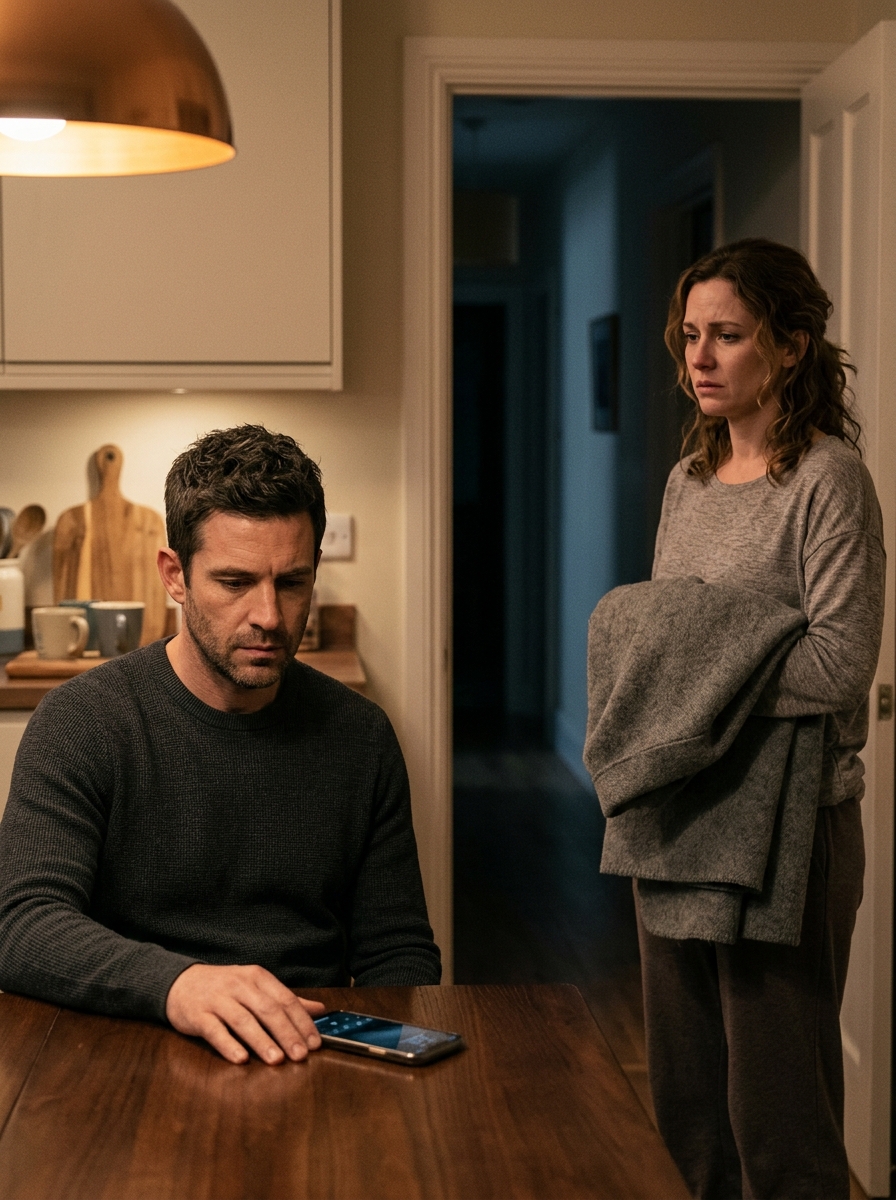
“That’s a very careful distinction.”
“It became a very important one.”
Jonah folded his arms. “You scheduled our intimacy, but you didn’t tell me.”
“I didn’t schedule intimacy. I scheduled time when we wouldn’t automatically fill the space with laundry or emails or you checking the oven temperature.”
“What did you think would happen during those hours?”
“I thought we might sit close. Talk. Kiss. Maybe have sex. Maybe not.”
“But the nights we did—”
“Sometimes I wanted to. Sometimes I wanted to want to. Sometimes I was tired and knew that if I went to bed, we would both scroll on our phones and call it rest.”
“And you decided that was enough?”
“No.” She met his eyes. “I decided I was allowed to choose something imperfectly.”
Jonah swallowed.
“That is not the same as wanting me.”
“No,” Tess said. “It isn’t.”
The directness of it left him without a response.
She continued before he could make one.
“But choosing closeness is not automatically fake. People choose to show up for one another all the time. I chose to make room for you. Sometimes desire arrived after that. Sometimes it didn’t. I was trying to stop treating desire like a light switch I had to flip before I was allowed to come near you.”
He heard the word “allowed” and thought of the notes in the calendar.
“No postmortem,” he said. “What does that mean?”
Tess exhaled.
“It means I didn’t want you asking whether it had been good enough.”
“I asked because I wanted to know how you felt.”
“You asked because you wanted reassurance.”
“Those aren’t mutually exclusive.”
“No. But I could feel you waiting for the answer.”
He remembered asking. Not every time, but often.
Did that feel good?
Are you okay?
Was that what you wanted?
He had thought he was being attentive. He had believed the questions made him safe.
But sometimes Tess would answer, and he would study her face afterward. If she said “yes,” he wanted to see whether she meant it. If she hesitated, he would go quiet. He had turned her response into a report he could grade himself against.
“I didn’t know I was doing that,” he said.
“I know.”
“That doesn’t make it less cruel.”
“I’m not calling you cruel.”
“Then what are you calling me?”
“Afraid.”
The word stayed between them.
Jonah looked at the blank place on the calendar where tonight’s entry had been.
“Were you afraid of me?”
“No.”
“Were you afraid of disappointing me?”
“Yes.”
“That sounds like the same thing.”
“It isn’t.” Tess picked up the blanket again, then put it down. “I was afraid of what would happen inside you if I said no. I was afraid you’d become distant. I was afraid I’d spend the rest of the evening proving I wasn’t rejecting you as a person. I was afraid that if I said yes when I wasn’t fully there, I could at least keep the peace.”
Jonah shut his eyes.
She did not say he had forced her. She did not accuse him of violating a boundary. He knew the difference mattered.
But she was telling him that his disappointment had become a pressure she planned around.
He had wanted to be desired freely.
Instead, he had made himself difficult to refuse.
***
Tess slept in the guest room.
Jonah did not sleep much anywhere.
At two in the morning, he got up and went into the kitchen. He opened the calendar again, even though he knew exactly what he would see.
The old Hawthorn events were still there.
He clicked through them.
One fell on a night when he had come home early and found Tess in the shower. He remembered that evening as unexpectedly tender. They had eaten leftovers at the counter and talked about a woman at her office who had been taking credit for other people’s work.
Another was the Sunday after he had received bad news about the bakery contract. He remembered Tess sitting beside him on the couch while he stared at the ceiling. He had assumed she had stayed because she wanted to.
Maybe she had stayed because she had scheduled herself to.
The thought made his stomach tighten.
He scrolled to an event from his birthday. The note was different.
“Make dinner. Ask what he needs. Do not make this a test.”
Jonah read it twice.
Then a third time.
He had spent that night convinced she had given him exactly what he wanted. She had bought the expensive coffee he liked. She had worn the green dress he always complimented. After dinner, she had taken his hand and led him upstairs.
Now he wondered whether the entire evening had been a performance conducted with extraordinary tenderness.
He wanted to call her cruel.
He wanted to call himself stupid.
Instead, he sat at the table until dawn and recognized something uglier: he had been using her desire as evidence of his value.
That was why the calendar had detonated him.
If the nights had been scheduled, then perhaps he had not been chosen. If he had not been chosen, then all the things he had believed about their marriage were suddenly unstable.
He had been treating intimacy as proof that the marriage was alive.
Tess had been treating scheduled time as a chance to keep the marriage alive.
They had used the same act to answer different questions.
***
The next morning, neither of them mentioned the calendar while they got ready for work.
Tess made toast and left half of it on the plate. Jonah packed a lunch he knew he would not eat.
At the door, she paused.
“I’ll be home around seven,” she said.
“Are you coming home?”
Her face tightened.
He regretted the wording immediately.
“I mean—”
“I know what you mean.”
He put his keys in his pocket. “I don’t want you to stay somewhere else.”
“I wasn’t planning to.”
“Okay.”
“But I’m not ready to act like nothing happened.”
“I know.”
“And I’m not ready to promise that if we talk about it, everything will be repaired.”
“I know.”
She looked at him for a long moment. “You keep saying that.”
“I’m trying not to argue with facts.”
That almost made her smile.
Almost.
At work, Jonah missed two calls and sent an inventory report to the wrong address. His supervisor asked if he was sick.
“Something at home,” Jonah said.
The supervisor, a man named Victor who had been married three times, gave him the kind of advice Jonah did not want.
“Don’t make major decisions angry.”
“I’m not angry.”
Victor looked at him.
Jonah corrected himself. “I’m not only angry.”
That was closer.
During his lunch break, he sat in his truck behind the bakery and typed a message to Tess.
Were you ever attracted to me during those nights?
He deleted it.
Were you pretending every time?
Deleted.
I don’t know how to be your husband if I can’t trust your yes.
He stared at that one for a while. It sounded like an accusation, even though it was true.
Finally, he wrote:
I’ll be home at seven. I won’t ask you to explain everything at once.

More From This Author