STORY
My Wife Scheduled Our Intimacy Under “Hawthorn Reconciliation.” Then She Told Me What the Appointments Were Really For
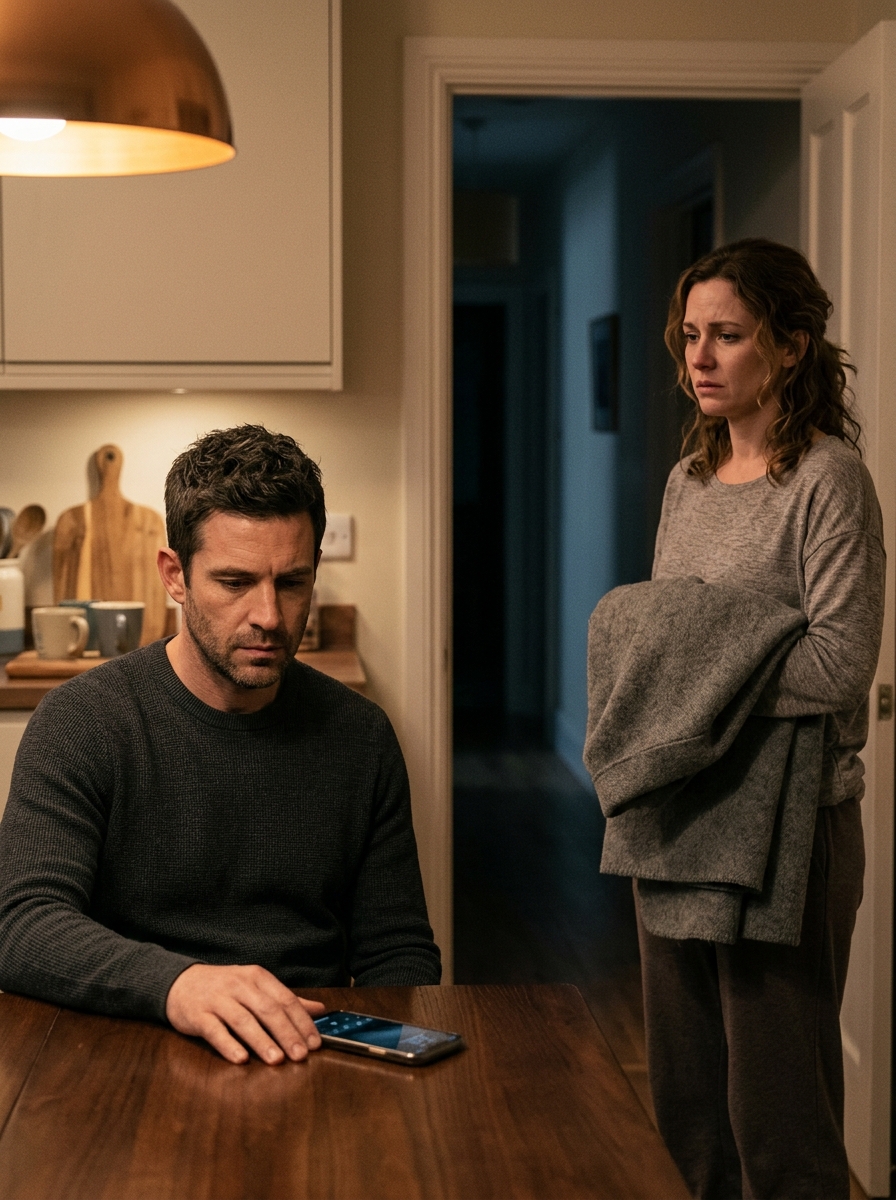
Tess responded ten minutes later.
Thank you. I need you to mean that.
He put the phone facedown.
The answer should have comforted him. Instead, it gave him a responsibility he had been trying to avoid: he would have to listen without turning her honesty into a verdict about himself.
***
They ate dinner at the table, not on the couch.
Tess had made pasta with roasted vegetables. Jonah could tell she had followed a recipe because the vegetables were cut into identical pieces.
He almost commented on it. The old version of him would have said something teasing about her trying to reconcile the carrots.
He kept quiet.
After they ate, Tess pushed her plate away.
“I need to tell you what Hawthorn was supposed to do,” she said.
Jonah nodded.
“I had read that desire doesn’t always begin with desire.”
“That sounds like something from a book.”
“It was.”
“What book?”
“It doesn’t matter.”
“It matters if the book told you to schedule me like a dentist appointment.”
“It didn’t tell me to do that.” She took a breath. “It said that for some people, desire is responsive. It grows out of feeling connected, unhurried, and safe. I recognized myself in that. But I also recognized that I had been waiting for spontaneous desire to arrive before I allowed myself to be close to you.”
“And you thought a calendar would solve that.”
“I thought a calendar might protect the conditions where something could happen.”
“Why didn’t you tell me?”
“Because the moment I told you, it would become about whether it worked.”
He looked down at the table. “You don’t trust me.”
“I trust you with a lot of things.”
“That’s not an answer.”
“No,” she said. “I didn’t trust you not to get excited and turn every scheduled evening into a promise.”
He felt the old heat rise in his face.
“Would that have been so terrible?”
“Yes.”
“Why?”
“Because then I would have been responsible for delivering the feeling you wanted.”
“I wanted you.”
“You wanted to feel wanted.”
He stood too quickly, and his chair scraped against the floor.
Tess flinched.
The sound stopped him.
He lowered himself back into the chair.
“I’m sorry,” he said.
She nodded but didn’t relax.
That was the part he had not understood before. Apologies did not erase the effect of his reactions. They only marked the point where he noticed.
“I do want you,” she said. “I need you to hear that without making me prove it.”
“I hear you.”
“Do you?”
“I’m trying.”
“Trying is not the same as hearing.”
He looked at her. “Then say it differently.”
Tess’s eyes filled, though her voice stayed steady.
“I love your body. I love your mind. I love the way you become completely absorbed in fixing something that nobody else even noticed was broken. I am attracted to you. I also do not want sex as often as you do. I also sometimes choose intimacy because I love you, even when my desire is quiet. Those things exist together.”
Jonah let the words settle.
“Then why does it feel like you’re saying I should accept less?”
“Because you think anything that isn’t an enthusiastic, spontaneous yes is less.”
“Isn’t it?”
“Not necessarily.”
“It is to me.”
Tess nodded slowly. “That’s the part we have to decide whether you can change.”
He looked toward the hallway.
“And if I can’t?”
“Then we need to be honest about that too.”
The sentence was not a threat. That made it frightening.
***
They saw Dr. Lian Park the following Tuesday.
Tess found her through a recommendation from a coworker. She was a couples counselor in a small office above a physical therapy clinic, with two mismatched chairs and a bowl of wrapped mints on the coffee table.
Jonah disliked the room immediately.
“It looks like every difficult conversation I’ve ever had,” he said.
Dr. Park smiled. “Then at least you know where you are.”
Tess sat beside him but did not touch him.
Dr. Park asked them to describe the calendar.
Jonah said, “My wife scheduled sex under a fake work project.”
Tess said, “I scheduled time to be together under a work project, and sometimes sex happened.”
Dr. Park looked between them.
“Those are not the same description.”
“No,” Jonah said. “That’s the problem.”
“What did the calendar mean to you?” Dr. Park asked Tess.
“A protected window.”
“What did it mean to you?” she asked Jonah.
“Proof that she intended to want me.”
Tess looked at him.
He did not look away.
Dr. Park nodded. “So the calendar was holding two incompatible expectations. Tess used it to create an opportunity without promising an outcome. Jonah experienced it as a promise that the outcome was wanted.”
“That sounds simple when you say it,” Tess said.
“Most painful things do after they are named.”
Jonah leaned back. “I don’t want a language lesson. I want to know whether my wife has been enduring me.”
Dr. Park did not soften her response.
“You may not get a clean answer to that question.”
“Why not?”
“Because endurance and choice are not always opposites. People sometimes choose difficult, imperfect forms of closeness for reasons that matter to them. The more useful questions may be: What did Tess feel she could not say? What did you do when you heard no? What are each of you willing to stop pretending?”
Jonah stared at the floor.
Tess said, “I can stop pretending that scheduling time automatically makes me want sex.”
Jonah said, “I can stop pretending that I’m fine with a marriage where I’m the only one who initiates.”
Dr. Park nodded. “Those are honest beginnings. They are not agreements yet.”
They spent the next hour making rules.
Not rules for sex. Rules for truth.
A scheduled block could be for connection, but it could not carry an automatic expectation of sex.
Either person could cancel or change the plan without providing a courtroom-grade explanation.
A no could be disappointing without becoming evidence of rejection.
A yes could be withdrawn without an emotional penalty.
No one would ask, “Was that enough?” immediately afterward.
If either of them felt they were performing, they would say so before resentment turned into a secret calendar.
Jonah hated how reasonable the agreements sounded.
He hated more that they were necessary.
At the end of the session, Dr. Park asked them to choose whether they were willing to spend six weeks trying the new terms.
“Six weeks?” Jonah asked.
“Not as a probationary period,” she said. “As a period long enough to notice patterns without demanding a final answer from every difficult evening.”
Tess looked at him.
Jonah felt the old instinct to promise everything. I’ll do whatever it takes. I’ll never make you feel pressured again. I’ll become a person who can accept any answer gracefully.
He knew promises like that were another form of performance.
“I’m willing,” he said. “But I don’t want us to use the six weeks to avoid deciding whether this works.”
“We won’t,” Tess said. “And I don’t want us to use the six weeks to force it to work.”
He nodded.

More From This Author