STORY
Uncle Jesse Opened My Father’s Hidden Box—Then the Family Lie Began Playing
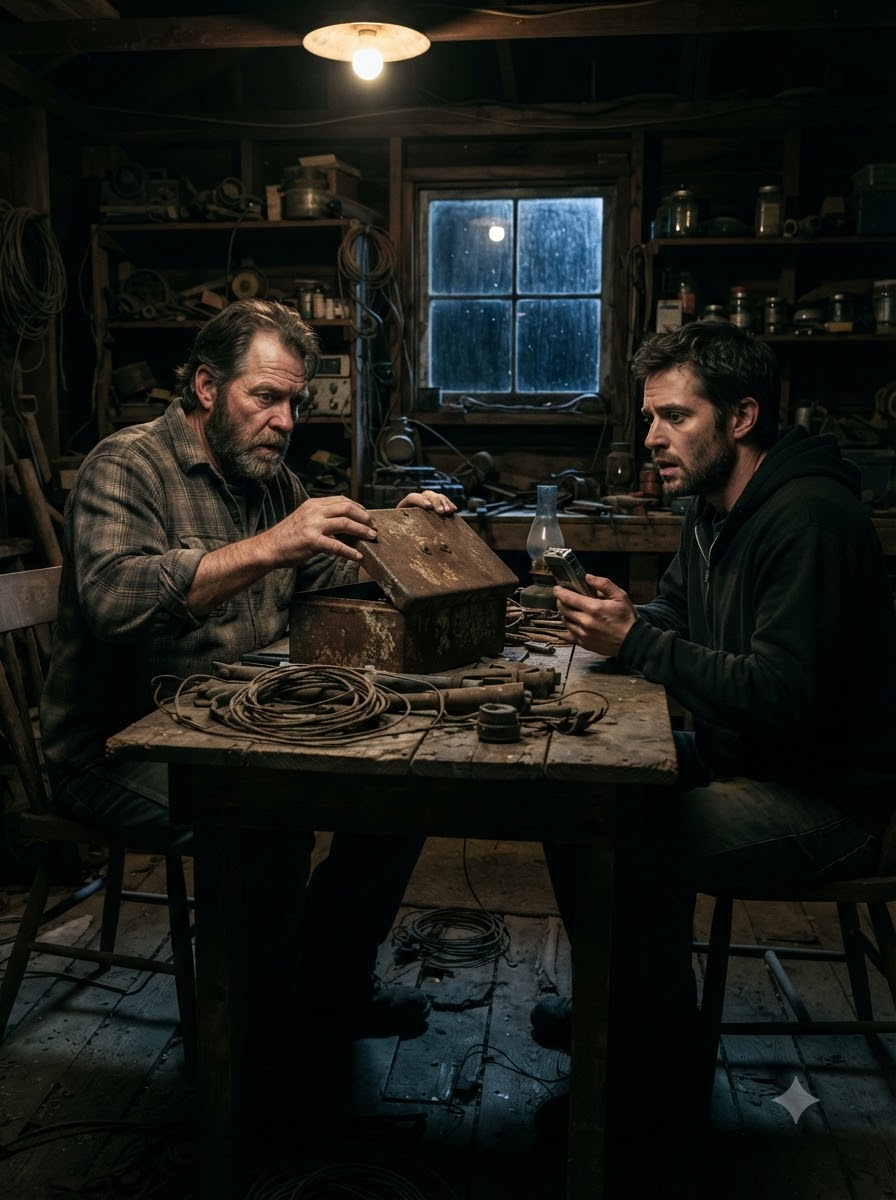
“She owed me money,” Elaine said. “If Ruth had any pride, she’d tell you herself. Instead you’ve let a convicted man turn you against the person who helped you.”
I looked across the room at Jesse. He stood by the window, his arms folded, listening to her describe our family as a debt she was owed.
“The notary says her stamp was stolen,” I said.
Elaine went silent.
Priya took the phone. She gave her name and told Elaine that the original deed, both notary records, and my father’s letter were being delivered to the county prosecutor. Elaine said the whole thing was Martin’s fault. Priya asked why a recent lien carried the stamp of a woman who had never met my mother.
Elaine hung up.
The investigation took months. Investigators obtained records from the gravel company, banks, and Elaine’s trust. Martin gave a sworn statement and turned over his journal. The gravel company confirmed it had paid the trust for years, believing it held the land legally. Financial records showed Elaine had taken hundreds of thousands of dollars from the lease. There was no loan to my parents and no payment that could explain the lien.
Elaine told investigators that Martin had prepared the deed without her knowledge. Martin’s journal and her letter contradicted her. She claimed my mother had asked her to manage the land, but the trust had never sent my mother a statement or a check. When questioned about the house lien, she blamed an assistant who had left her office years earlier. The notary’s missing-stamp report was dated two weeks before the lien was filed.
Elaine was charged with fraud and forgery. Martin admitted his part in the land transfer and cooperated with the prosecution. Jesse met with the prosecutor too. He answered questions about the bar fight without trying to make himself innocent of it. That mattered to him, though I wished he had been allowed to tell the whole story long ago.
Priya filed to clear the false lien and challenge the land transfer. Once a judge found that my father could not have signed a deed six months after his death, Elaine’s claim to the property collapsed. The court ordered an accounting of the lease money. Elaine’s assets were frozen while the case moved forward, and the gravel company began placing new payments in escrow.
None of it happened quickly enough to make my mother’s illness disappear. Priya helped me arrange a payment plan with the hospital, and Jesse kept working nights. We sold my car and held on to the house. The first money released to my mother came almost a year after we opened the tin. It covered the arrears, her prescriptions, and enough repairs that rain no longer came through the back window.
Elaine pleaded guilty before trial. Under the settlement and restitution order, she lost the land, repaid a substantial portion of what she had taken, and received a prison sentence. Some of the money was gone for good. The court could restore ownership and order repayment; it could not give my mother back the years she had worked herself exhausted, believing no help was coming.
At a family gathering after the sentencing, one cousin said Elaine had only done what she thought was best. My mother, who had once swallowed every insult for the sake of peace, asked him whose best he meant. No one answered. A few relatives apologized to Jesse. He accepted some of those apologies. Others he let pass.
In the spring, Jesse planted the garden again. My mother sat on the porch while I helped him set the new fence posts exactly where the old ones had stood. Then we carried her chair down beside the beds so she could tell us where she wanted tomatoes.
Jesse pressed seeds into the soil with his thumb. I remembered the day he had told me this patch would feed people with good hearts. I had thought he was making a joke, and for a while the bare ground had seemed to hold nothing at all.
My mother called us in before the light faded. Jesse brushed the dirt from his hands and held the door for her. On the kitchen table lay my father’s letter, safely framed now, where any of us could read it.

More From This Author