STORY
We Had Become an Excellent Team—Then My Boundary Forced My Husband to Choose Our Marriage
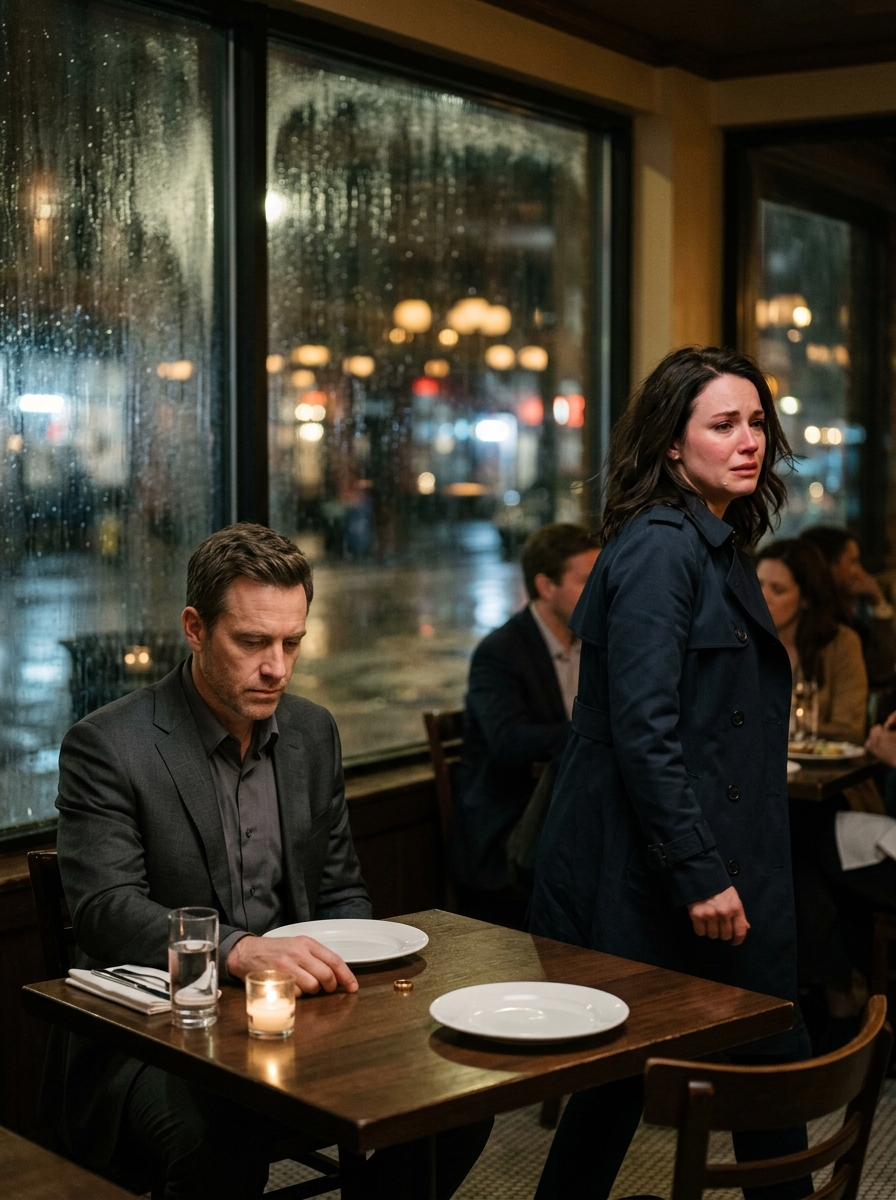
His therapist helped him understand why usefulness felt safer than desire. Growing up, he had been praised for being the calm child, the one who knew what to do, the one who did not make adults worry.
My therapist helped me see how often I turned disappointment into a silent exam.
We practiced saying simple things.
“I want you to stay.”
“I need an hour alone.”
“I miss touching you.”
“I am not ready.”
“I am ready, but I’m afraid.”
One evening, Mason came to the workshop carrying nothing.
No food. No tools. No paperwork.
He stood in the doorway.
“I don’t have a reason to be here,” he said.
“You can come in anyway.”
He did.
We sat on overturned crates while rain tapped the metal roof. He told me his mother had asked whether I was still his husband.
“What did you say?” I asked.
“I said yes.”
“Was that true?”
“I don’t know.”
I looked at him.
He rubbed his thumb over the edge of his wedding ring.
“I didn’t know if being married was something you could remain while living apart,” he said. “I didn’t know if I was allowed to call myself your husband if I had failed at being your partner.”
“You didn’t fail once.”
“I know.”
“You failed repeatedly.”
He nodded.
“That is different from being a failure.”
He looked toward the rain.
“I’m trying to learn the difference.”
After a while, he asked, “May I hug you?”
I said yes.
The hug was awkward. His arms came around me carefully, as though I were something newly repaired. I held myself stiffly at first.
Then I felt his breath change.
Not dramatic. Not the sound of a man being rescued. Just a quiet release.
I let my arms close around him.
When we separated, he did not ask whether it had been good.
That helped more than if he had.
***
We still fought.
The worst fight happened over a leaking pipe under the kitchen sink.
Mason had come to the apartment to collect a box of winter clothes. I heard water dripping and found him crouched beneath the cabinet with a wrench.
“What are you doing?” I asked.
“Fixing the leak.”
“Did I ask you to?”
He looked up.
“I heard it.”
“Of course you did.”
He stood slowly. “What is that supposed to mean?”
“It means you can’t walk into a room without finding something to repair.”
“I’m not repairing you.”
“You don’t get to decide what counts.”
His face hardened.
“I am trying to help.”
“I didn’t need help. I needed you to come here and be with me.”
“I was with you.”
“You were under the sink.”
“Because there was water on the floor.”
“And now you’ve proved you’re useful.”
He threw the wrench onto the counter. It struck the wood with a sharp crack.
“What do you want from me?”
“I want you to come empty-handed.”
“I did come empty-handed.”
“You brought the same person.”
The words silenced us.
Mason looked as if I had slapped him.
I regretted them immediately, but this time I did not rush to erase the damage.
“I’m sorry,” I said. “That was cruel.”
“Yes.”
“I’m afraid that if I accept your help, I owe you closeness.”
“You don’t.”
“I know that intellectually.”
“I need you to know it with me.”
I leaned against the counter.
He looked at the wrench.
“I don’t know how to come empty-handed,” he said. “Every time I do, I feel like I’m asking you to carry me.”
“Maybe sometimes I want to carry you.”
“I don’t know how to let you.”
“Then ask.”
He nodded.
“Can I finish fixing the leak?”
I laughed, tired and unwilling.
“Yes.”
“Is that because you want me to fix it, or because you’re afraid I’ll leave if you say no?”
“Because there’s water on the floor.”
He smiled.
It was the first time in weeks that the answer had been enough.
After he finished, he washed his hands. Then he stood in the kitchen and waited.
“Can I kiss you?” he asked.
My heart began to beat quickly.
“Yes.”
The kiss was brief and tentative. It did not erase the fight. It did not prove the marriage had returned. When it ended, we remained standing several inches apart.
Mason looked at me.
“Was that okay?”
“It was real.”
He nodded.
“That’s enough for today.”
It was.
***
The separation lasted seven weeks.
Long enough for the arrangement to stop feeling like a dramatic pause and start feeling like an actual life. I learned which corner of the gallery roof leaked. Mason learned that he hated cooking for one. We both got used to making decisions without automatically adding the other person to the sentence.
At the end of those seven weeks, we met with Dr. Nunez to decide what we were doing.
“I don’t want to move back into the apartment and become roommates again,” I said.
“I don’t either,” Mason said.
“Then what are we choosing?”
Mason looked at me.
“You,” he said.
“That sounds beautiful. It is not specific.”
He took a breath.
“We choose to remain married while we rebuild. We keep living separately for now. We continue counseling. We do not hide our situation from friends or family, and we do not use physical closeness as a progress report.”
I listened.
“What happens if one of us decides this isn’t enough?”
“We say so before we leave,” he said. “No silent punishment. No testing. No waiting for the other person to notice.”
“And if we decide to live together again?”
“We make that decision because we want the shared life, not because separate rent is inconvenient.”
Dr. Nunez nodded but did not congratulate us.
There was no applause. No certificate for successfully saving a marriage.
Outside, Mason and I stood on the sidewalk beneath the same gray sky that had followed us through most of the winter.
“Do you want to come upstairs?” he asked.
“To your apartment?”
“To see it.”
“Why?”
“I moved the chair you hate.”
I smiled.
“That is not a reason.”
“No,” he said. “The reason is that I want to show you where I live now. Not ask you to move back. Just let you see it.”
I went with him.
The apartment looked almost the same. The repaired pantry hinge held. The kitchen was clean. The empty side of the bedroom had become a place where Mason kept books and folded laundry.
He had not turned it into a shrine to my absence.
That mattered.
We sat together on the couch.
After a while, Mason asked, “May I hold your hand?”
“Yes.”
He did.
I rested my head against his shoulder, then lifted it before the moment could become a promise.
“I need to go back tonight,” I said.
“I know.”
“Can I come over Sunday?”
He looked at me.
“Because you want to?”
“Because I want to.”
“Then yes.”
He raised our joined hands and kissed my knuckles.
It was an old gesture, one he had made hundreds of times. But this time he had asked first.
I looked at him.
“I still don’t know what happens next,” I said.

More From This Author