STORY
We Had Become an Excellent Team—Then My Boundary Forced My Husband to Choose Our Marriage
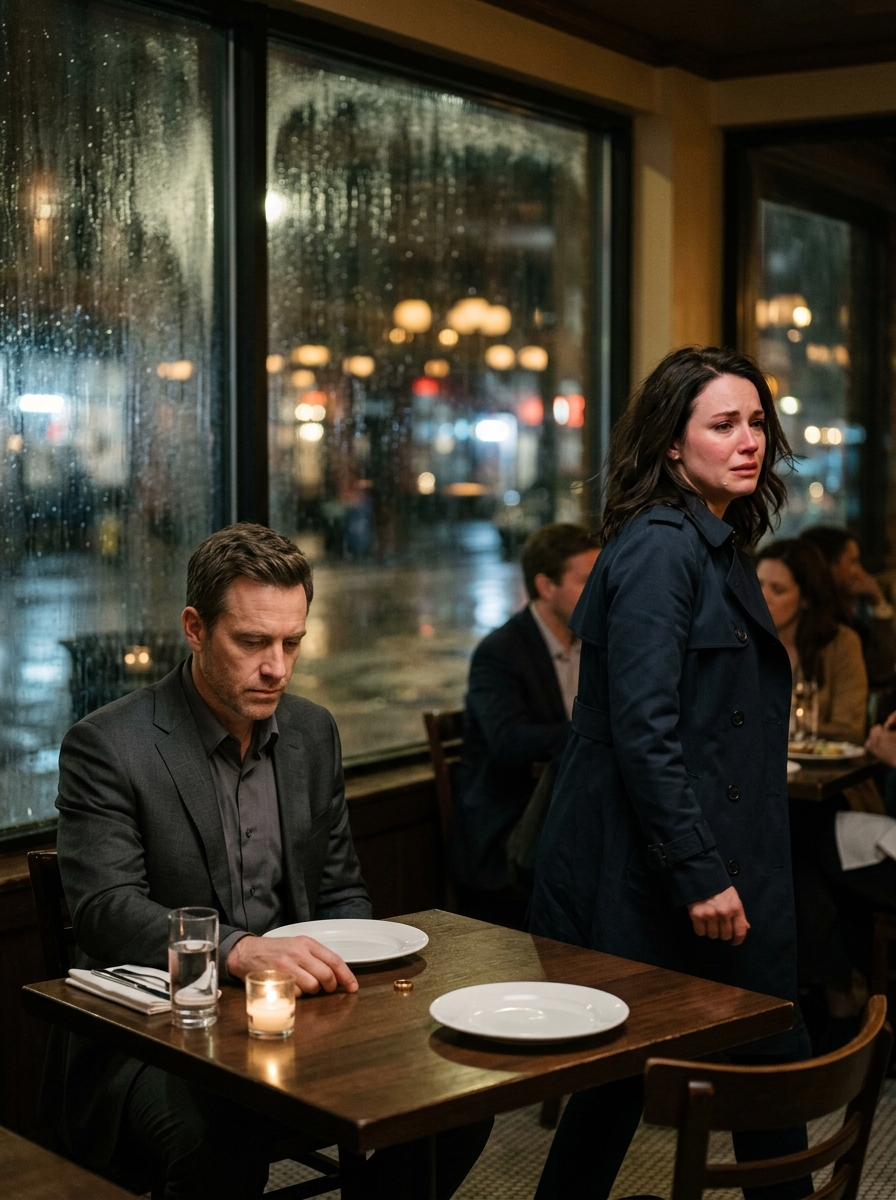
I sat beside him until the conversation ended. Then I went to bed.
The next morning, he apologized.
I said it was fine.
It was not fine, but I understood what he meant. He was exhausted. He was afraid. He could not divide himself into more pieces.
After that, I stopped initiating.
I told myself I was respecting his limits. I told myself I was giving him room. I told myself I could wait until the crisis passed.
The crisis did pass.
The silence did not.
Mason assumed my retreat meant I no longer wanted him. I assumed his failure to reach for me meant he had been relieved by my retreat. We both behaved as if the other person had clearly spoken.
Neither of us had.
***
Dr. Nunez’s office was on the second floor of a brick building above a tax accountant. There were no inspirational prints on the walls, only a broad window, two chairs, and a low table with a bowl of wrapped mints.
Mason sat with his knees apart and his hands clasped.
I sat angled toward the window.
Dr. Nunez looked from one of us to the other. “What brings you here?”
Mason answered first. “My husband says we’re roommates.”
“I said we’ve become roommates,” I corrected.
She nodded. “What’s the difference?”
“A roommate is honest about the arrangement,” I said.
Mason turned his head toward me.
Dr. Nunez did not look away. “What does a marriage require that your current arrangement does not?”
I wanted to say desire. I wanted to say touch. I wanted to say that I could stand in the kitchen beside Mason and feel lonelier than I had ever felt alone.
Instead I said, “Being seen as more than useful.”
Mason’s mouth moved slightly.
“What?” I asked.
“Nothing.”
“Say it.”
He looked at Dr. Nunez. “I was going to say that I see him.”
“Do you feel seen by him?” she asked.
He was quiet.
The question reached him differently.
“I feel depended on,” he said finally. “That’s not the same.”
Dr. Nunez leaned back. “It sounds as though both of you have built a relationship that functions very well when no one asks for anything vulnerable.”
“That’s not fair,” Mason said.
“No,” she said. “It may not be fair. It may still be accurate.”
For the next hour, she asked questions that made both of us defensive.
What did we miss?
What did we fear would happen if we asked directly?
What had we each stopped offering because we believed the other person did not want it?
Mason said he was afraid of being asked to promise more than he could sustain.
I said I was afraid of having to beg for something that should have been freely given.
Dr. Nunez did not suggest a date night. She did not prescribe a week of scheduled affection. She did not tell us to be grateful for what we had.
Before we left, she said, “For now, stop treating physical closeness as evidence. Do not use a kiss to prove the marriage is alive. Do not use the absence of a kiss to prove it is dead. Talk about what you want before you act.”
Mason gave a short, humorless laugh.
“That sounds simple,” he said.
“It is simple,” she replied. “It will not be easy.”
In the parking lot, he asked, “Do you want to get lunch?”
The question was ordinary. The way he asked it was not.
“Are you asking because you want to spend time with me,” I said, “or because lunch is what people do after therapy?”
He looked at the building behind us.
“I don’t know how to answer without failing.”
“That’s the problem.”
“No,” he said. “The problem is that you keep turning every answer into a test.”
I flinched.
He saw it.
His expression softened, but he did not apologize immediately. That was new too.
“I want lunch,” he said. “I also don’t know how to be with you right now. Both things are true.”
I nodded.
We ate at a small place across the street. We discussed soup.
It was not intimacy. It was, at least, honest.
***
At home, Mason continued to do what Mason did.
He replaced the loose hinge on the pantry door. He ordered the filter for the furnace. He left a container of soup in the refrigerator with a note identifying the ingredients in case I wanted to bring some to the workshop.
I looked at the note for a long time.
**For you. Not an apology.**
I called him.
“Why did you write that?” I asked.
“Because I knew you’d think it was an apology.”
“Is it?”
“No.”
“Then what is it?”
“A container of soup.”
I laughed despite myself.
He was quiet.
“I don’t want you to stop caring for me,” I said.
“I don’t know how to care for you without making you angry.”
“I’m angry because care is the only thing you give me.”
His breath caught.
“That isn’t true.”
“Then tell me what else you give me.”
There was a long pause.
“I give you the version of me that can get through the day,” he said.
The words were so bare that I sat down.
Mason continued. “I go to work. I take care of my mother. I come home. I make sure everything is handled. I thought if I kept the hard parts away from you, I was protecting us.”
“You kept yourself away from me.”
“I know that now.”
“Do you?”
“Yes.”
His voice had become rough.
“I thought you stopped touching me because you regretted wanting me,” he said. “I thought you were being kind by not making me reject you again.”
I pressed the phone against my ear.
“You thought I was being kind?”
“I thought you were finished asking.”
“I was waiting for you to notice.”
“I noticed.”
“Then why didn’t you say anything?”
“Because every time I imagined asking, I heard you saying no.”
“You never asked.”
“You never touched me.”
We were both silent.
The argument had led us back to the same locked door.
Mason said, “I don’t want our whole marriage to be explained by one night.”
“Neither do I.”
“But it was not one night,” he said. “It was everything after. It was me deciding that being useful was safer than being wanted. It was you deciding that silence would make me understand what I’d done.”
I closed my eyes.
“I hate that you’re right.”
“I hate that I am too.”
***
Our first attempt at being together outside therapy lasted forty-two minutes.
We went to a small cinema that showed old films and had seats too narrow for comfort. Mason bought the tickets. I bought the popcorn. We did not discuss errands, his mother, my business, or the rent.
For a while, it felt almost easy.
Then Mason’s phone vibrated.
He looked at the screen.
“My mother’s facility,” he said.
“Answer it.”
He did.
I watched his face change as he listened. His shoulders drew tight. He asked questions. He wrote something in the notes app. He said he would come by in the morning.

More From This Author