STORY
He Called Their Bedroom Dead—Then His Wife Learned What He Had Been Pretending to Feel
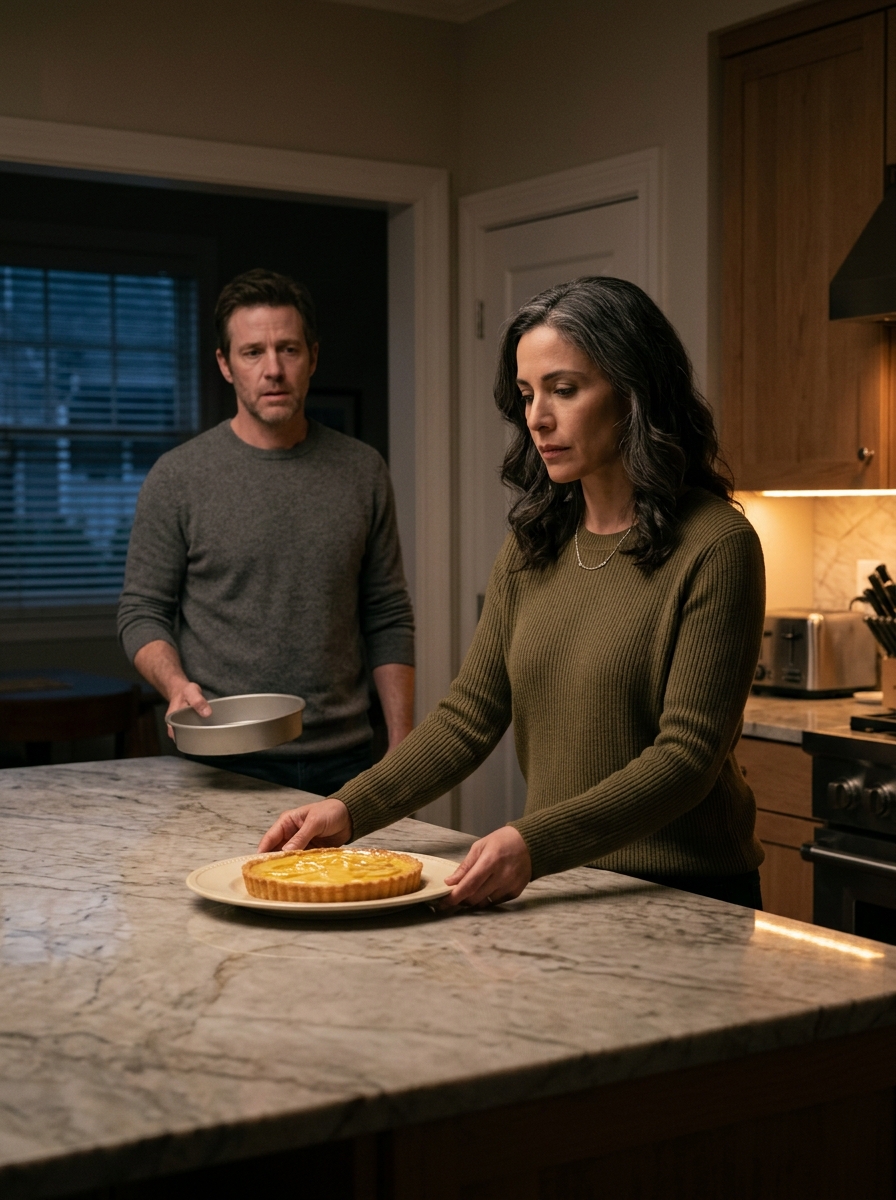
She learned that her grief was not shallow because sex mattered to her. She learned that she had spent years turning his desire into a measurement of her worth, but that did not make the desire itself unimportant. She could release one belief without pretending she had no need.
One evening, Dr. Park asked, “If no one called either choice selfish, what would you choose?”
Mara began to cry before she answered.
“I would choose not to be the person who stays and slowly becomes cruel.”
Dr. Park nodded.
“What would Bennett choose?”
“He would choose not to be the person who asks me to stay and slowly disappear.”
That was when Mara knew.
Not because she had stopped loving him.
Because she still did.
***
Bennett moved into a small apartment across town in October.
They packed together.
Mara kept the blue shirt from the hotel night. She did not know why. Bennett kept the chipped green mug he used every morning. They divided books by owner, then laughed when they discovered that nearly every book had been purchased for both of them.
At the bottom of a closet, Mara found the dress she had worn to their first anniversary dinner.
She held it up.
Bennett stood in the doorway.
“I remember this,” he said.
“You told me I looked beautiful.”
“You did.”
“That answer used to make me nervous.”
“Why?”
“Because I could never tell whether you meant beautiful like a painting or beautiful like a woman you wanted.”
He nodded slowly. “I see that now.”
“Do you?”
“Yes.”
She lowered the dress. “I don’t want you to feel guilty every time you remember loving me.”
“I don’t.”
“You should feel responsible. That’s different.”
“I do.”
She folded the dress and placed it in her suitcase.
On his last night in the apartment, they sat on the floor of the bedroom with their backs against the bed.
The room looked smaller without his boxes stacked along the wall.
Mara said, “I want to ask you something.”
“Okay.”
“Did you ever regret marrying me?”
Bennett answered without hesitation.
“No.”
“Even knowing this?”
“I didn’t know this then.”
“That’s not what I asked.”
He looked at her. “No. I regret that I let you enter a marriage with a version of me I had not examined.”
Mara nodded.
“I don’t regret marrying you either,” she said. “But I regret that I thought love would automatically make us honest.”
He reached for her hand, then stopped.
“Can I?”
She looked at his fingers.
“Yes.”
He took her hand.
The touch was familiar but no longer a promise. It did not have to become anything else.
After a while, Bennett asked, “May I kiss you goodbye?”
Mara considered the question.
“Do you want to?”
“Yes,” he said. “I want to kiss you goodbye. I don’t know what category it belongs in.”
She smiled through her tears. “It doesn’t need a category.”
The kiss was soft and brief.
When it ended, neither of them tried to extend it.
***
Six months after Bennett moved out, Mara saw him at a restaurant near the museum.
He was alone, reading a book.
She almost kept walking. Then he looked up.
They had dinner.
They talked about Cal, the bakery below Dr. Park’s office, the terrible radiator in Bennett’s new apartment. They did not talk about whether either of them had found someone else. Not yet.
When the check came, Bennett asked if she was all right.
Mara looked toward the window. Evening had settled over the street, turning the glass black.
“I’m sad,” she said. “But I’m not confused.”
He nodded.
“Are you?”
“Sad,” he said. “Not confused.”
She reached across the table and touched his wrist.
Neither of them mistook the gesture for an answer.
Their bedroom had not been dead. It had been filled with two people answering questions neither of them had asked aloud.
When they finally stopped performing the answers, they discovered that love could survive the truth.
It simply could not decide, by itself, what shape their lives should take.

More From This Author