STORY
He Took a Six-Week Residency to Escape Their Silence—Then Told His Wife Why He’d Stopped Touching Her
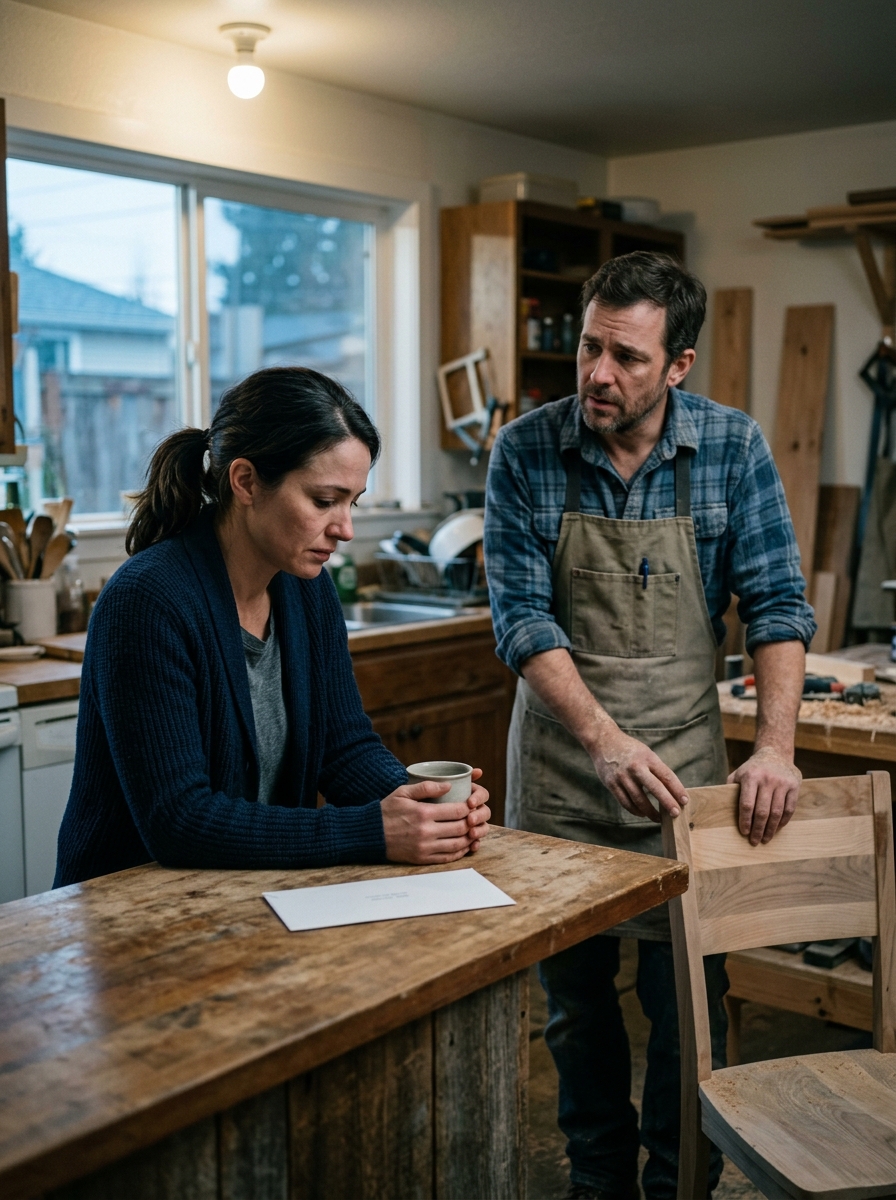
Her eyes filled.
“I hate that you’re being reasonable.”
“I’m not trying to be reasonable.”
“What are you trying to be?”
“True.”
She sat beside him.
“I want you to go,” she said.
He let out a breath.
“I want you to go, and I want you to come back, and I don’t want either of those things to be a test.”
“I can agree to that.”
They planned one call a week. No daily check-ins. No conversations designed to measure longing. If something urgent happened, either could call, but neither would create a crisis to force proof of love.
On the night before he left, Rhea stood in the bedroom doorway while Tomas packed his toiletries.
“I want to try something,” she said.
He turned.
“Something what?”
“Something close.”
His face became careful.
“Do you want to?”
“I want to want to. I also want to see what happens if we don’t make that a requirement.”
“That’s a complicated yes.”
“It’s the only kind I have.”
He nodded. “Then we go slowly.”
They sat on the edge of the bed.
Rhea reached for him first.
The kiss was familiar enough to hurt. It carried ten years of mornings, arguments, shared errands, and all the times she had mistaken being wanted for being obligated.
Tomas did not rush.
When he asked whether she wanted to continue, she said yes because she meant it in that moment.
They moved closer. Rhea kept one hand against his shoulder, not to push him away but to remind herself that she had a body with choices.
For a while, she stayed.
Then her attention began to pull inward.
The ceiling blurred. The room flattened. She heard the old internal click of the desk drawer closing.
Tomas said her name once.
Not sharply. Not anxiously.
She opened her eyes.
“I’m going,” she said.
“Do you want to stop?”
“Yes.”
He moved away immediately.
The absence of his weight beside her made the room feel cold.
Rhea pulled the blanket around herself. “I’m sorry.”
“I’m disappointed,” he said.
She looked at him.
He swallowed. “I’m disappointed that we had to stop. I’m not disappointed in you.”
The distinction was so clean it frightened her.
“You can say that now,” she whispered. “What about tomorrow?”
“Tomorrow I may still be disappointed.”
“And you’ll leave anyway.”
“I’m still going to Marlowe.”
She nodded, crying silently.
Tomas did not pull her against him. He did not ask her to stop crying. He waited until she reached for his hand.
“I thought if you stopped wanting me, you’d leave,” she said.
“I didn’t stop wanting you.”
“You stopped touching me.”
“I thought touching you was hurting you.”
“It was. Sometimes.”
He looked down at their joined hands.
“I can be kind and still leave,” he said. “You can be honest and still be wanted. I know those things in my head. I’m trying to teach my body.”
Rhea leaned against his shoulder.
“Don’t make tonight mean we’re fixed.”
“I won’t.”
“Don’t make it mean we’re doomed.”
“I won’t.”
They slept in the same bed, holding hands across the space between them.
In the morning, Tomas drove to Marlowe Mill.
Rhea watched his truck disappear at the end of the street. She wanted to run after it. She wanted to be relieved. She wanted to sleep for fourteen hours.
Instead, she went inside and called Dr. Khatri’s office for an individual appointment.
***
The residency was not romantic.
Tomas shared a dormitory-style apartment with three other restorers, one of whom snored loudly enough to rattle the pipes. He worked ten-hour days under a roof that leaked in two places. He ate too many sandwiches and sent Rhea photographs of warped floorboards.
Rhea sent pictures of the dog next door sleeping beneath her porch.
Their first weekly call lasted eleven minutes.
Their second lasted forty.
During the third, Rhea said, “I had a bad night.”
Tomas sat on the floor of his temporary room, his back against the bed.
“What happened?”
“A caller kept saying she was fine, but she was whispering.”
“Did you get help?”
“Yes.”
“Are you safe now?”
“Yes.”
He waited.
She heard the question beneath his question.
“I’m not calling because I want you to fix it,” she said.
“I know.”
“I just wanted to hear your voice.”
“I’m glad you called.”
She closed her eyes.
“Don’t sound so relieved.”
“I’m not relieved. I’m glad.”
“That’s different?”
“Yes.”
She smiled despite herself.
They still fought.
In the fourth week, Tomas missed their call because the restoration team had discovered rot beneath the mill’s west staircase. Rhea had been awake for nearly twenty-four hours and had spent the entire day imagining that he was busy living a life that did not contain her.
When he called back, she answered with, “You forgot.”
“I didn’t forget. I was under the stairs.”
“You could have texted.”
“Yes.”
“You said we were going to be different.”
“I know.”
“You’re very calm.”
“I’m trying not to defend myself.”
“I don’t want you to be calm. I want you to care.”
“I care.”
“Then why does every honest thing you do look like leaving?”
The silence on the phone was not empty. It was crowded with all the things neither of them knew how to say.
Finally Tomas said, “Because I am learning how to care without making you responsible for my fear.”
Rhea sat on the edge of the bed.
“I hate that sentence.”
“I know.”
“I hate that you can go away and become better at this.”
“I’m not becoming better. I’m practicing.”
“What if I don’t catch up?”
“Then we’ll know more than we knew before.”
She wanted him to promise that knowledge would lead them to the same place.
He did not.
That night, Rhea admitted to Dr. Khatri that she had been waiting for Tomas to fail so she could prove that his leaving meant something final.
Dr. Khatri asked, “What would happen if it did?”
“I’d be right.”
“Would being right help?”
“No.”
“What are you afraid of more: that he will leave, or that he will stay and you will have to be fully known?”
Rhea sat with that.
“The second one,” she said.
Dr. Khatri did not congratulate her for the insight. She only asked what Rhea wanted to do with it.
Rhea thought of the bedroom, the desk, the small locked office in her mind.
“I want to stop making him guess,” she said.
That was not a cure.
It was a direction.
***
When Tomas came home six weeks later, he called from the driveway.
“I’m here.”
Rhea looked through the window. His truck was covered in dust. He had lost weight. There was a new line beside his mouth.
“Do you want me to open the door?” she asked.
“Yes.”
She unlocked it.
He stood on the porch with his duffel bag. For a moment, neither moved.
Then Rhea said, “You can come in.”
He did.
The house looked exactly the same, which felt almost insulting. The same blue bowl by the door. The same crooked painting above the stairs. The same chair he had repaired before leaving.
“Is the guest room still mine?” he asked.

More From This Author