STORY
He Told His Best Friend Their Bedroom Was Dead—But His Reason for Stopping Wasn’t What His Wife Expected
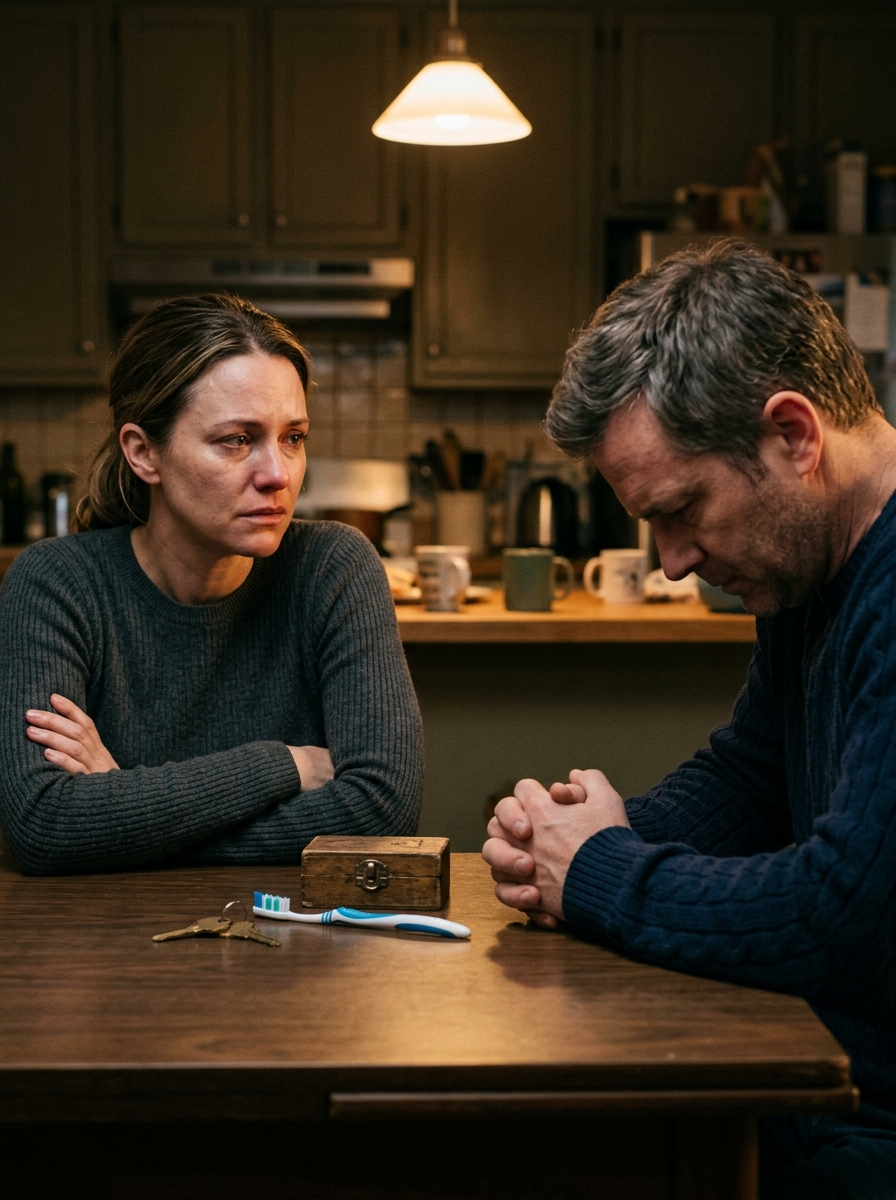
“I don’t want to be the place where you practice being good,” she said.
Owen’s voice was quiet. “I don’t want you to be the place where I practice being unhurt.”
They stood in the same room, each waiting for the other to make the next movement.
Finally, Nora said, “We need help.”
“I know.”
“Not a sex therapist who gives us homework about touching elbows.”
“Agreed.”
“A couples therapist.”
“Okay.”
“And you need to tell me when you’re in therapy.”
“Yes.”
“And I need to tell you when I’m afraid instead of making you guess.”
He swallowed. “Yes.”
Nora looked at him. “That doesn’t mean I’m promising anything.”
“I know.”
“It doesn’t mean we’re going to have sex.”
“I know.”
“It doesn’t mean I’ll suddenly want to.”
“I know.”
She waited.
“What do you want?” he asked.
It was the first time he had asked her that question in months without the hidden weight of a request underneath it.
“I want to know whether we’re still married,” she said.
Owen’s eyes lifted to hers.
“I think we are,” he said.
“You think?”
“I want us to be. But I don’t want to call this marriage healthy just because we’re good at splitting groceries and remembering dentist appointments.”
Nora nodded. “Then let’s find out.”
***
Dr. Lila Marin’s office was above a bakery, and the waiting room smelled like cinnamon and overheated radiators.
She was in her fifties, with silver hair cut close to her head and a habit of letting silence sit long enough to become useful. On their first appointment, she asked them to describe the problem without using the phrase dead bedroom.
Owen looked at Nora.
Nora looked at Owen.
“I thought he didn’t want me,” Nora said.
“I thought she had asked me not to want her,” Owen said.
Dr. Marin nodded. “Those are not the same sentence.”
“No,” Nora said. “But they lived in the same house.”
Over the next hour, they reconstructed the two years in pieces.
Nora talked about the pregnancy loss and the way every attempt at closeness afterward felt like a test she had not studied for. She had been afraid that if she said yes to Owen, he would believe she was healed. She had been afraid that if she said no, he would look wounded and she would have to comfort him.
Owen talked about how he had interpreted her fear as a boundary and his own silence as protection. He admitted that not asking had eventually become a refuge. It meant he never had to hear no. It also meant he never had to risk showing Nora how much he wanted her.
“You were both protecting yourselves,” Dr. Marin said, “but from different injuries.”
Nora leaned back. “That makes it sound mutual and tidy.”
“It wasn’t tidy.”
“No.”
“You made a boundary in a moment of pain,” Dr. Marin continued. “Owen treated that boundary as permanent because he was afraid to ask whether anything had changed. You expected him to understand the boundary’s expiration without you saying so. Neither of you was cruel. Both of you were unclear.”
Owen looked down at his hands.
Dr. Marin turned to him. “Respecting a no does not mean refusing to ever seek new information.”
He nodded.
Then she turned to Nora. “And being the person who said no does not mean you are responsible for managing his emotional response forever. But if what you want changes, you have to tell him. He cannot safely infer consent from hope.”
Nora appreciated that Dr. Marin did not make either of them the injured saint.
They left with one assignment: once a week, they would have a conversation about the state of their marriage that was not allowed to become a negotiation about sex.
No promises.
No accusations.
No interpreting silence.
The first conversation lasted nine minutes.
The second lasted twenty-seven.
The third ended with Nora crying in the pantry because Owen had said, “I miss being your husband,” and she had heard, You are failing at being my wife.
He apologized for the wording.
She apologized for the interpretation.
Neither apology solved anything, but both of them stayed in the room.
***
Their first attempt at physical closeness happened on a Tuesday evening while rain tapped against the kitchen windows.
They had cooked together. Owen had made pasta; Nora had chopped herbs. They had argued about whether the sauce needed more salt, then laughed when Owen accidentally knocked the spoon onto the floor.
It felt almost ordinary.
After dinner, they sat on opposite ends of the sofa.
Owen looked at her. “Would you like me to hold your hand?”
Nora closed her eyes.
“What?”
“Nothing.”
“I can not—”
“No. It’s fine.”
He waited.
She opened her eyes. “Yes. You can hold my hand.”
He did so carefully, his palm warm around hers.
They stayed that way for nearly a minute.
Then Owen asked, “Is this okay?”
“Yes.”
A minute later: “Still okay?”
Nora pulled her hand away.
Owen immediately released it.
“I’m sorry,” he said.
“Stop apologizing.”
“I don’t know what else to do.”
“That’s the problem.”
He sat back. “I’m trying to make sure you want this.”
“You’re asking so often I can’t feel what I want. I’m just answering questions.”
“I don’t want to assume.”
“You don’t have to assume everything. You could be here.”
“I am here.”
“No, you’re standing outside me with a clipboard.”
His face tightened.
“That’s not fair.”
“No, it isn’t.”
“You told me never to ask.”
“I told you that when I was hurting.”
“And now you’re angry that I believed you.”
“I’m angry that you believed one sentence more than you believed the rest of our marriage.”
Owen stood.
The room changed immediately. The ordinary warmth vanished.
“I don’t know how to do this,” he said.
“Neither do I.”
“I am trying not to take from you.”
“You keep talking like I’m something that can be taken.”
“Because I’m afraid of becoming that man.”
“What man?”
“The one who wants something and decides wanting it means he deserves it.”
Nora rose too. “You don’t have to become that man. You also don’t have to become a ghost and call it morality.”
He looked toward the kitchen.
“I thought if I never asked, you could never say no.”
The truth of it landed harder than anything else.
Nora folded her arms. “So this was partly about protecting your ego.”
“Yes.”
She looked at him for a long time.
“Thank you for finally saying it.”
“I’m not proud of it.”
“You don’t have to be. But you do have to stop calling fear respect.”
Owen nodded. His eyes were bright, but he did not look away.
“What do you want me to do?” he asked.
“I don’t know.”
“That’s the answer you always give.”
“Because I don’t know.”
“I need something.”
“So do I.”
He sat back down. The anger drained out of him, leaving exhaustion.
After a while, Nora said, “Maybe we need to separate for a little while.”
Owen did not move.
“Is that what you want?”
“I want to stop waking up every morning and wondering whether your silence means you’re being kind or whether you’ve already left.”

More From This Author